


TLDR: I coined the term "performative marketing"; I'm building two AI-powered businesses that have nothing to do with AI content; and I included two prompts so you can explore your own version. This one's meaty.
I’ve been trying to name this feeling for a while now, this sense that building with AI beyond content creation might be the real unlock that nobody’s talking about.
It’s not burnout. I’ve been burned out before, and this isn’t that. It’s not even frustration, exactly. It’s more like... a slow dawning that the thing I’ve been doing for 18 years (building a personal brand, showing up, putting my face and name on everything) has a ceiling I didn’t see coming.
Not a revenue ceiling. A life ceiling.
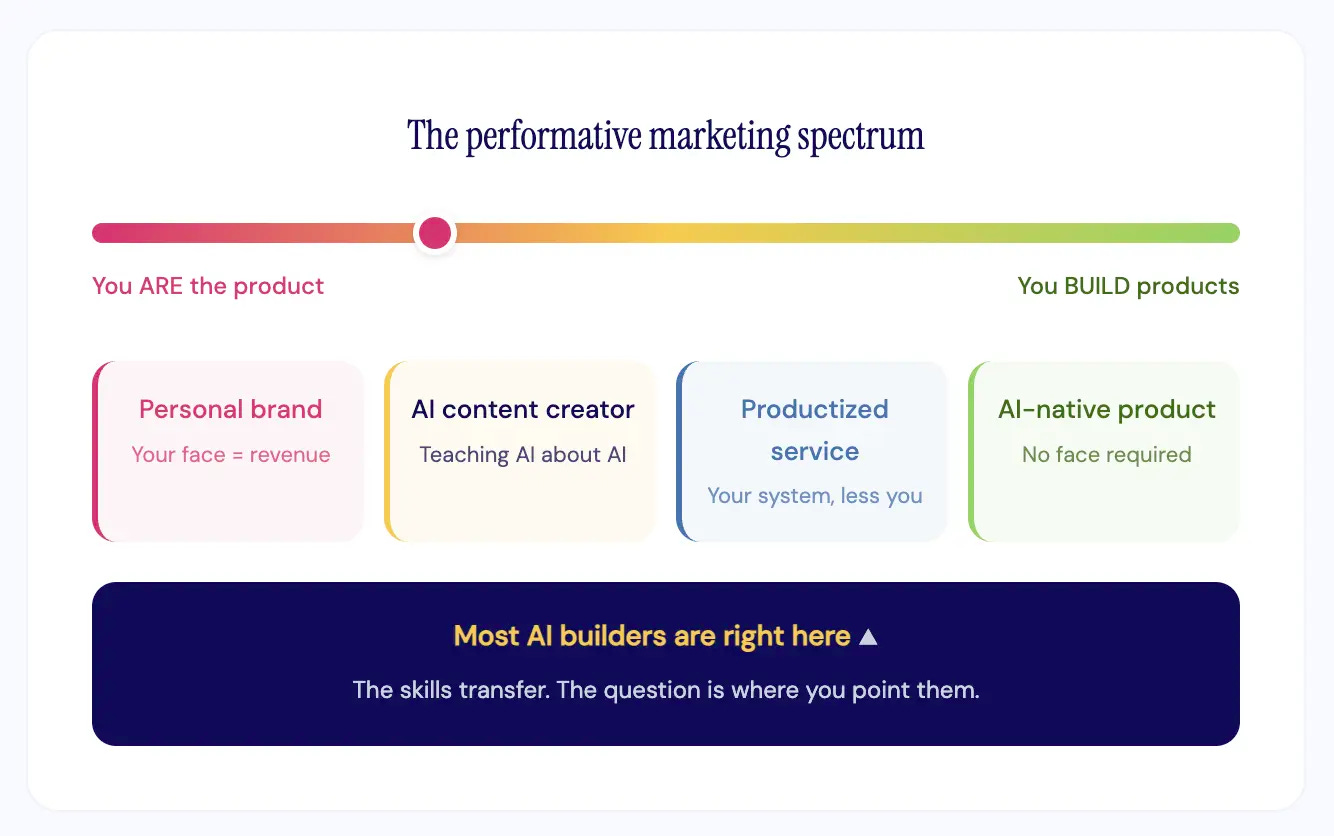
I recently started calling it performative marketing, and the second I said it out loud, I knew I’d found the word. Here’s what I mean: performative marketing is the requirement to constantly produce visible, personal, on-brand content in order to generate revenue. Your face, your name, your stories, your opinions, your hot takes... all of it, every single day, because the machine stops the moment you do.
And look, it works. I’m not saying it doesn’t. I’ve built a real business doing exactly that. But performative marketing extracts something from you over time, and the platforms are designed to make you think you owe them that extraction.
You don’t.
. . .
Hey, I’m Kim Doyal.
18 years building online, and I’m just getting started on the interesting part. I write about building real businesses with AI... apps, agents, systems, and revenue streams that don’t require me to perform for an algorithm every day.
No hype. No “10X your productivity” lists. Just what it actually looks like when a midlife entrepreneur decides to build in a way that works for her.
. . .
What Does the AI Creator Economy Actually Look Like Right Now?
Mostly... people using AI to talk about AI.
Scroll through AI newsletters, YouTube channels, and LinkedIn feeds. The pattern is the same everywhere: someone discovers AI tools, gets good at using them, starts teaching others, and builds an audience of people who also want to teach others.
And of course that’s happening.
Of course it is. AI is genuinely new; people are discovering things every single day, and they’re testing, pushing, and sharing what they find in real time. That energy is real, the excitement is earned, and I’m part of it too. I teach people how to build with AI. I write about it constantly. I’m not standing outside this ecosystem throwing stones.
But I do think there’s a blind spot in it that almost nobody’s talking about.
The skills you’re developing right now, building apps, automating workflows, deploying AI agents, creating entire content systems, are not limited to “the AI space.” They transfer to any market. A $6 billion market. A $109 billion market. Markets where nobody cares about your follower count, your subscriber number, or whether you posted today.
And those markets are sitting right there, waiting for someone who knows how to build.
Why Does Nobody Talk About This?
Because building outside the creator economy doesn’t get you followers/subscribers the same way, and that’s a primary currency many AI creators are optimizing for (or views).
It’s less sexy, and it doesn’t photograph well for LinkedIn [or insert any other platform].
“I built a faceless credit education platform with AI agents” doesn’t get the same dopamine hit as “I grew my AI newsletter to 50K subscribers.” One of those gets you subscribers/followers, and the other gets you an asset you can sell for seven figures without anyone knowing your name.
AND... remember how the algorithms work.
Once you start reading, following, and engaging with a certain type of content, the algorithms think that’s all you want to see/consume. So when I say that people aren’t talking about this, this is based on what shows up in my feed. It’s also why I often have to remind myself that I’m a real person with interests outside my business 😉. As much as I love what I’m doing (more so than I have ever since starting this journey in 2008), you know the saying... nature abhors a vacuum.
Other perspectives, interests, and hobbies are vitally important.
*Side note prediction: we’re going to see a push towards more humanities, life skills, and analog interests, the better and better AI becomes (hardly a new prediction, but I feel this one deep down).
I know which one I’m choosing at this point in my life.
What Even Is Performative Marketing?
It’s worth naming this clearly because I think a lot of people feel it, but haven’t had the language for it.
Performative marketing is when revenue generation requires your ongoing personal visibility. You are the product. Your face, your personality, your daily presence on platforms... that IS the business model. And the moment you stop performing, revenue slows.
It’s not that it’s wrong. It’s that it has a cost most people don’t calculate until they’re deep in it.
In short, if the revenue stops when you stop showing up, you’re in a performative marketing model.
Here’s what performative marketing looks like in practice: you wake up, and your first thought is what to post (or, if you know you’ve scheduled posts, it’s to check engagement). You’re on vacation, and you feel guilty for not creating content. You track your engagement metrics like vital signs. You’ve turned every personal experience into potential content, and you can’t tell the difference between what you genuinely think and what will perform well.
Sound familiar?
Now here’s the thing. The platforms are designed to reinforce this cycle. The algorithms reward consistency, personal content, and faces. They literally optimize for your continued presence. And we’ve all internalized this so deeply that stepping away from it feels irresponsible. Like you’re leaving money on the table.
But what if the real money isn’t on that table at all?

Is the AI Debate Even Real, or Is It Just Another False Binary?
Let’s talk about the elephant for a second.
There’s this idea floating around that you have to be either completely for AI or completely against it. You’re either embracing every tool and singing its praises, or you’re somehow on the wrong side of history.
But that framing erases a lot of legitimate ground.
Some people aren’t interested in AI because every interaction they’ve had with it looks like chatting with a slightly confused intern, and I get that. If your only experience with AI is asking ChatGPT to rewrite an email, you haven’t seen what it can actually do. Some people have real moral concerns, and those aren’t trivial either. The energy consumption from data centers, the water usage, the environmental cost of training these models... those are real numbers with real consequences. Am I concerned about that? Of course I am. And people who are losing their jobs to automation aren’t being dramatic. That’s happening, and pretending it isn’t doesn’t serve anyone.
So no, this isn’t a “you’re either with us or against us” situation.
It’s more nuanced than that, and anyone who tells you otherwise is selling you snake oil, not a perspective.
But here’s where I land on it personally: we’ve been here before with technology, and every time, the question wasn’t whether the tool existed but who got to use it and what they built with it.
Think about it this way.
Nobody boycotted the Harry Potter films because the Quidditch matches were CGI. Nobody stopped watching those movies because the Whomping Willow wasn’t a real tree or because Dobby was computer-generated. We didn’t just accept that technology could bring something magical to life... we celebrated it. We lined up for it. We cried when Dobby died, and he was never real to begin with.
AI is the same kind of lever applied to business. The technology exists... the question is what you choose to do with it.
AI isn’t an identity, it’s infrastructure. You don’t define yourself by your hammer; you define yourself by what you build with it.
And right now, a lot of people building with AI are building... more content about AI.
What if you built something else entirely?
What Am I Actually Building? (Two Projects, Zero Personal Brand Required)
Two AI-powered businesses in completely different verticals — a credit education platform for women and a direct-booking vacation rental site — both designed to generate revenue without my face, my name, or my daily presence on any platform.
I’ve been sitting on this for a while, and I think it’s time to talk about it.
I’m currently building two projects that have nothing to do with AI content creation, teaching people about AI, or my personal brand. Both are in different verticals and use AI as the core infrastructure. Neither one requires my face, my name, or my daily presence on any platform. (Both will have a presence on platforms, but it won’t be me personally or any “real person”).
They’re experiments.
And they’re already teaching me different things about what AI can do because I wouldn’t have an immediate use for them with my personal brand (although I’m sure they’ll trigger ideas).
Project 1: A Credit Education and Repair Platform for Women
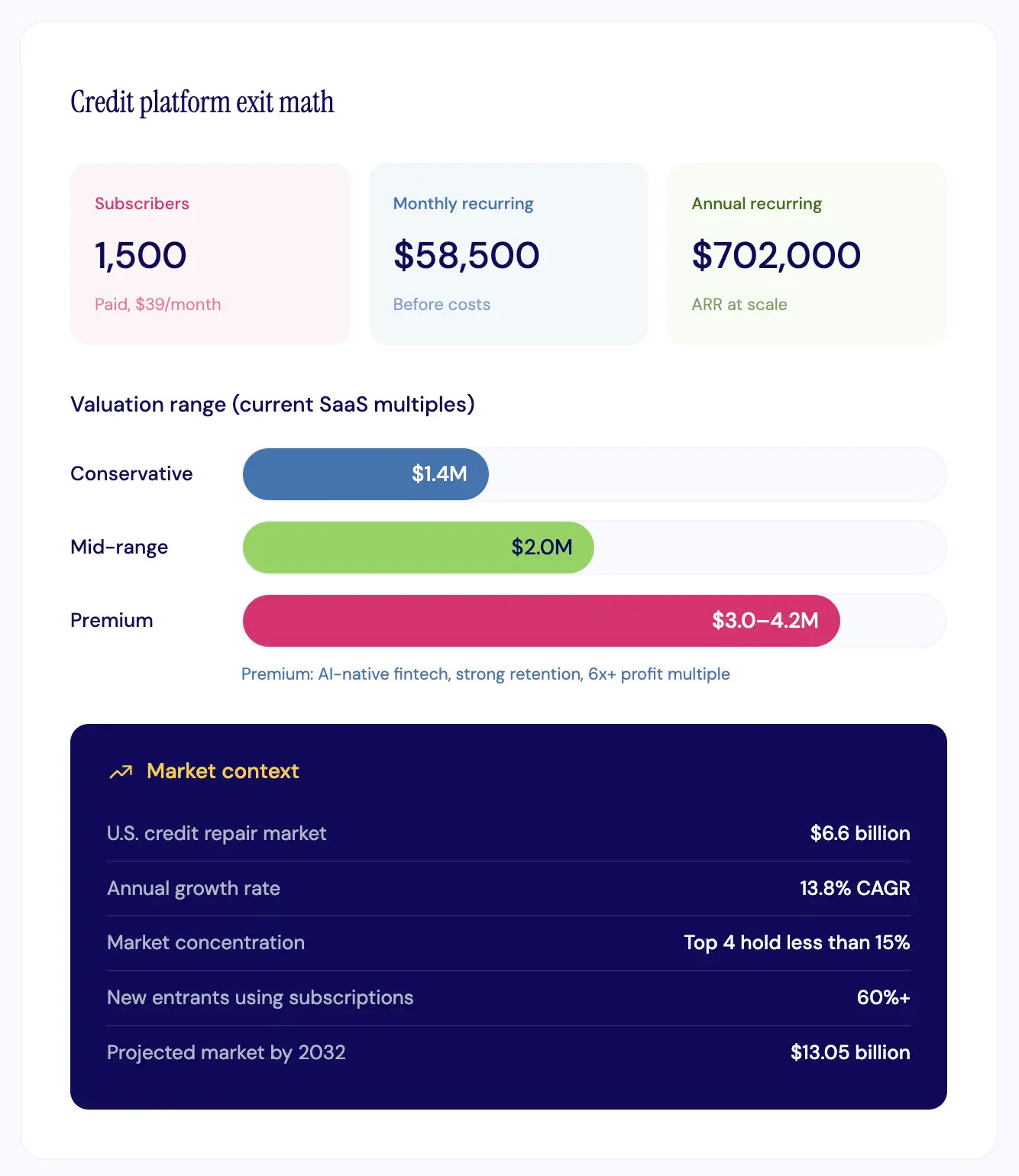
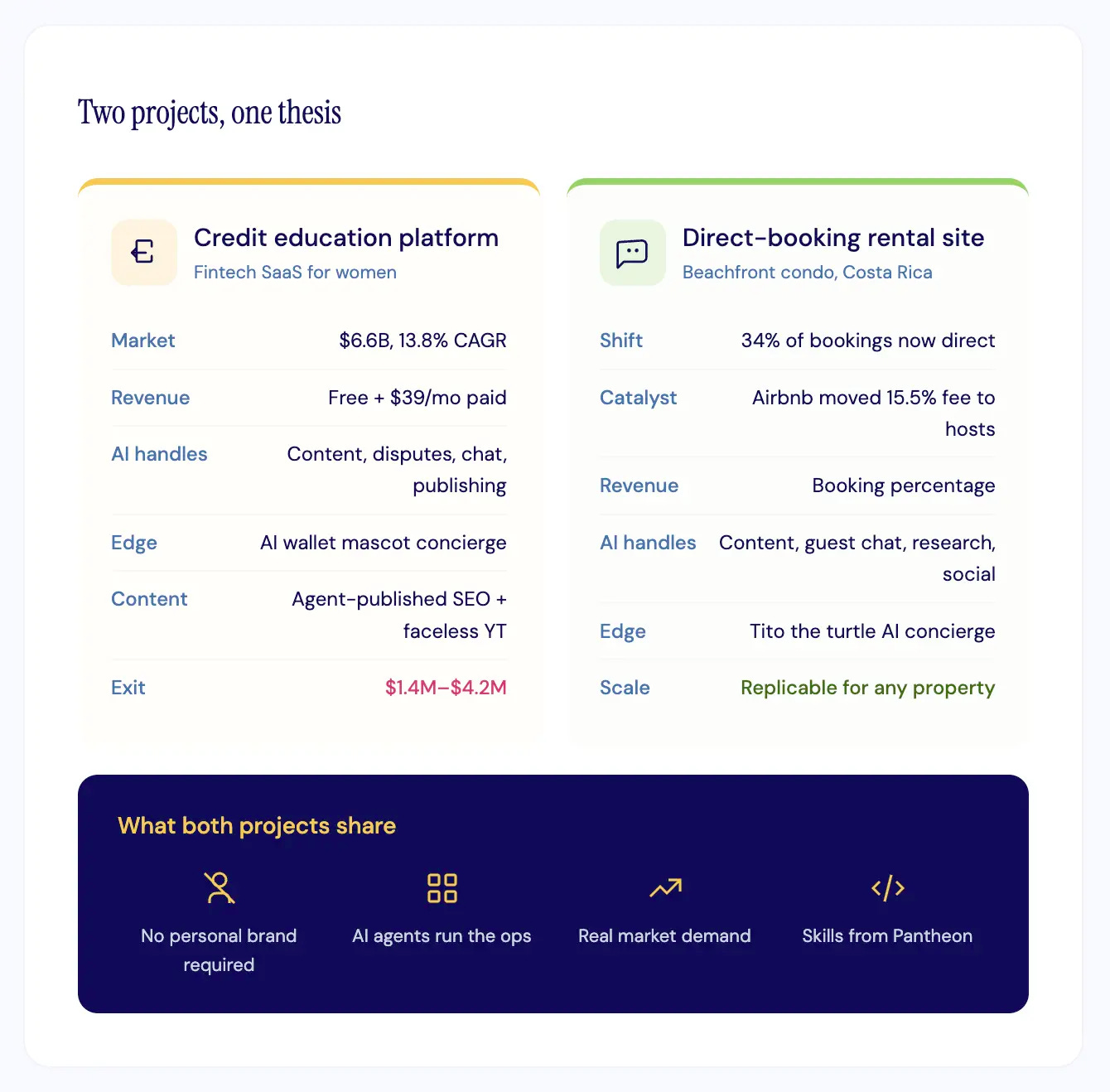
The U.S. credit repair market is a $6.6 billion industry. Let that number sit for a second. And it’s growing at nearly 14% year over year, projected to more than double to $13 billion by 2032.
But here’s what makes this interesting for someone like me (or someone like you): the market is massively fragmented. The top four companies hold less than 15% of total market share. There’s no dominant player. Over 60% of new credit repair offerings are subscription-based platforms with self-service tools.
In other words, it’s a huge, growing market with no clear winner, where the business model is recurring subscriptions and the delivery mechanism is... software.
Sound like something AI could build?
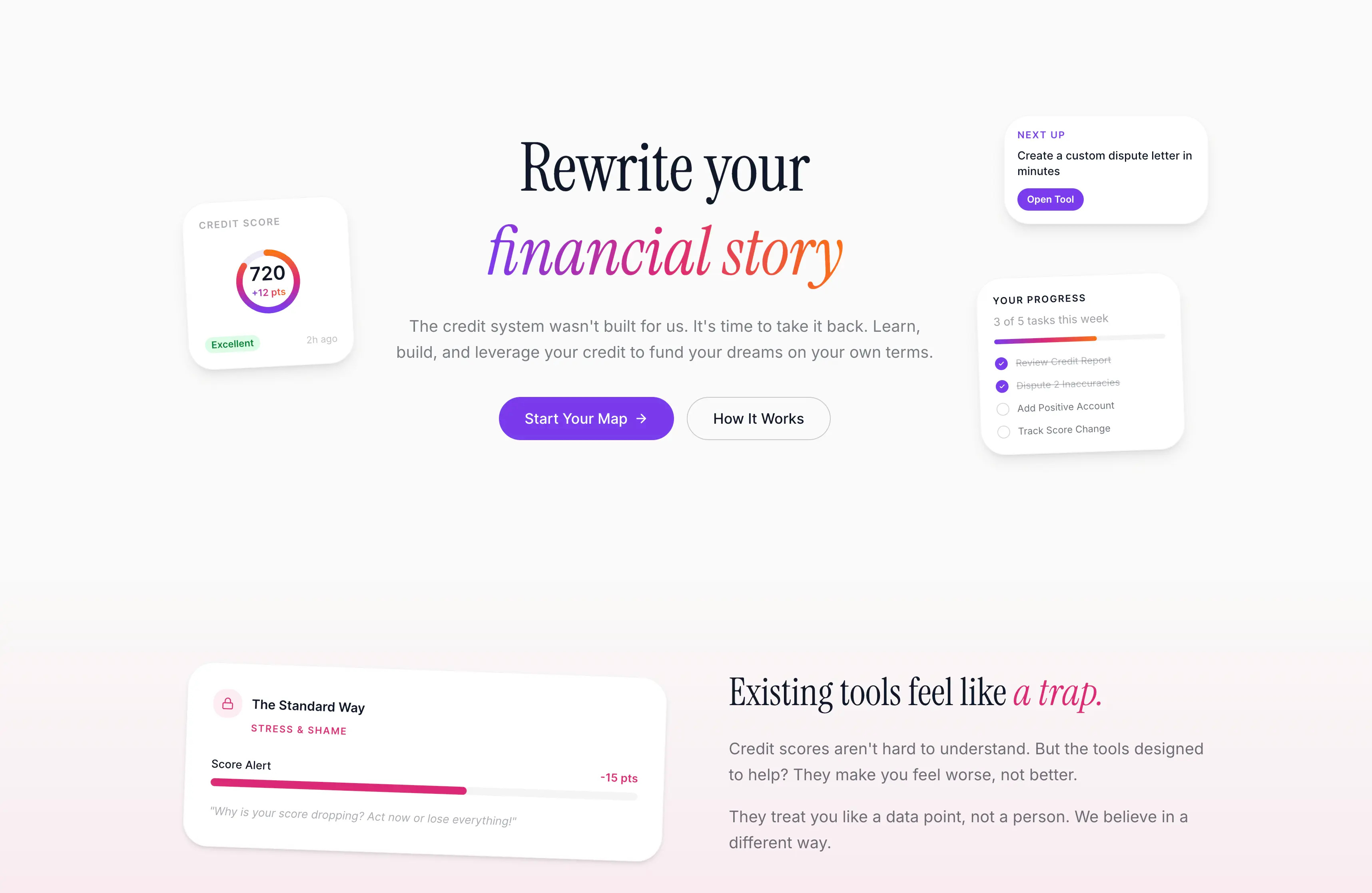
Here’s what this platform will do: a free tier gives users a customized plan and account. The paid tier ($39/month) uses AI to help women craft dispute letters, understand their credit reports, build action plans, and actually take control of their financial future. It’s not a done-for-you service. It’s a “done with you, powered by AI” experience that helps women understand the system, not just fix a number.
And here’s the part that genuinely excites me about this project: I’ve already built the content engine. I have a set of AI agents, one researches SEO terms, one pulls up the topic, one does the deep research, one writes the article, and one publishes it to the site. While I’m sleeping, the glossary is getting populated, the blog is growing, and the knowledge base is expanding.
I want to be honest about what that feels like, because I think it matters more than the market data.
The first time I checked the site and saw that a new article had been researched, written, and published while I was gardening out back... something shifted. It wasn’t just “cool, automation works.” It was the realization that I’d built a thing that creates value without extracting my attention, my energy, or my identity. That’s the feeling I’ve been chasing without knowing it.
*Also... I want to be crystal clear about this with both projects: During this first phase, both are taking my time and energy. I’m still in the build phase with both (the websites are done, but they need to be optimized and have additional work to be completed). But the energy required for both is a different kind of energy than my personal brand requires; both are equally valuable, and I love both, but they’re completely different entities.
There’s a little AI chat widget on the site, too (she’s a wallet, and she’s adorable), where users can ask questions and get real answers from a trained knowledge base.
I’m planning to test faceless YouTube in the finance space. The research I did on this showed that faceless content actually performs well in finance, which makes sense... people want the information, not the influencer.
Now let’s talk about the math, and not the “trust me, bro” kind (and I did tell Claude I wanted real math, not “Claude math,” lol).
At 1,500 paying subscribers and $39/month, that’s $702,000 in annual recurring revenue. In the current SaaS market, bootstrapped businesses under $1 million ARR are valued at 2.85x profit on average, with top-quartile deals reaching 6x or higher when churn is low and margins are strong.
For an AI-native platform (which means margins should be excellent because AI handles the heavy lifting, not human labor, and the heavy lifting by AI is low-cost), in a fintech vertical (which commands premium multiples), with strong subscriber retention:
Conservative valuation: $1.4 million. Mid-range: $2 million. Premium (AI positioning, strong retention, growing market): $3-4 million.
That’s at 1,500 subscribers.
With a potential business credit tier added later, we’re talking about a completely different scale.
And none of it requires me to show my face on a single platform.

Project 2: A Direct-Booking Vacation Rental Site
This one started differently.
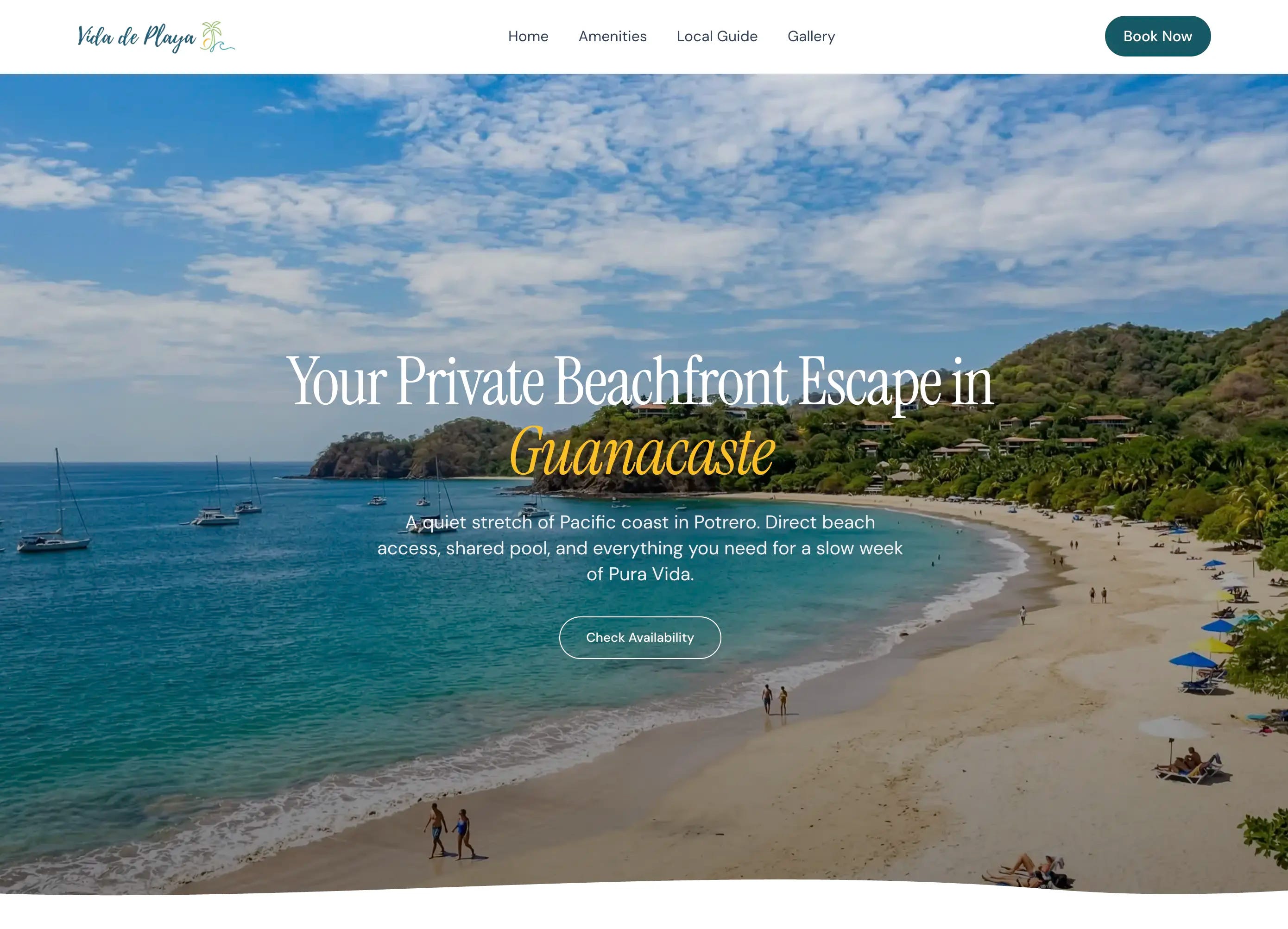
A friend has a beachfront condo in Potrero, Costa Rica (where I lived for almost 2 years, so this felt like low-hanging fruit since I know the area), and I asked if I could build them a direct-booking website as a test. The question I wanted to answer is: can AI agents run the content, local expertise, and guest experience for a single property... well enough that people book directly instead of through Airbnb?
The timing on this turns out to be perfect.
Direct booking sites already account for 34% of all vacation rental bookings, second only to Airbnb’s 46%. And that number is growing because Airbnb just made a move that’s accelerating the shift: in October 2025, they eliminated the split fee model and moved the entire 15.5% service fee onto hosts. Previously, hosts paid 3%; now, they absorb the full platform fee.
Hosts are pissed... and they’re building direct booking sites.
But here’s what most direct booking sites miss: they’re just booking engines. There’s no relationship, no local expertise, no reason a traveler would choose your standalone site over the trust and convenience of Airbnb.
That’s where Tito comes in.
Tito is a 47-year-old Olive Ridley sea turtle who has lived at Potrero Beach his entire life. He knows where the surf breaks, when the howler monkeys come down to the trees, and which soda makes the best casado in town. He’s the AI concierge on the site, and guests can chat with him about anything related to the area, the property, or the experience.
Might some people think this is a little ‘out there’? Possibly.
BUT... Is it memorable and differentiated, and something Airbnb will never do for a single property?
Totally.
The AI concierge space for vacation rentals is now a legitimate category, with companies charging $12- $50/month per property for automated guest messaging. But those companies sell tools TO property managers. I built the AI concierge INTO the guest experience itself, as a character, on a direct-booking site. That’s not a tool... that’s a brand differentiator.
And the content engine works the same way as the credit platform: AI agents scrape Reddit, Google reviews, and Airbnb listings to understand what travelers actually ask about Potrero, what they complain about, and what differentiates a great experience there. That research feeds Tito’s knowledge base and drives 2-3 published posts per week about the area.
The property becomes the trusted local resource that Airbnb can never be, because Airbnb doesn’t care about Potrero specifically.
We do.
What’s the Pattern Nobody’s Seeing?
Here’s what both projects have in common, and why I think this matters for anyone building with AI right now:
No face required. Neither project needs my personal brand, my audience, or my daily content output. They run on AI infrastructure and market demand, not on me showing up.
AI handles the heavy lifting. Research, content creation, publishing, customer interaction... the agents do the work that would normally require a team.
Real markets with real revenue. Not engagement or followers or “brand deals,” but actual paying customers solving actual problems in verticals where demand already exists. (and… no judgement. I simply know what I want for myself at this stage of my life. I’m also not giving up my personal brand).
The skills transfer. Everything I learned while building my own Pantheon agent system (the 33-agent AI business operating system I’ve written about before) made these projects possible. The architecture thinking, the agent design, the pipeline automation... those skills aren’t “AI content creator” skills. They’re building skills. And they work in any market.
Each project is a test.
How much can agents handle?
What still needs a human touch?
Where’s the line?
I don’t know the answers yet, and that’s the point.
But here’s what I do know: however both of these work, they’ll work. It’s just to what degree and what it looks like, and I’m perfectly fine with letting that evolve.

How Do You Find Your Own Version of This?
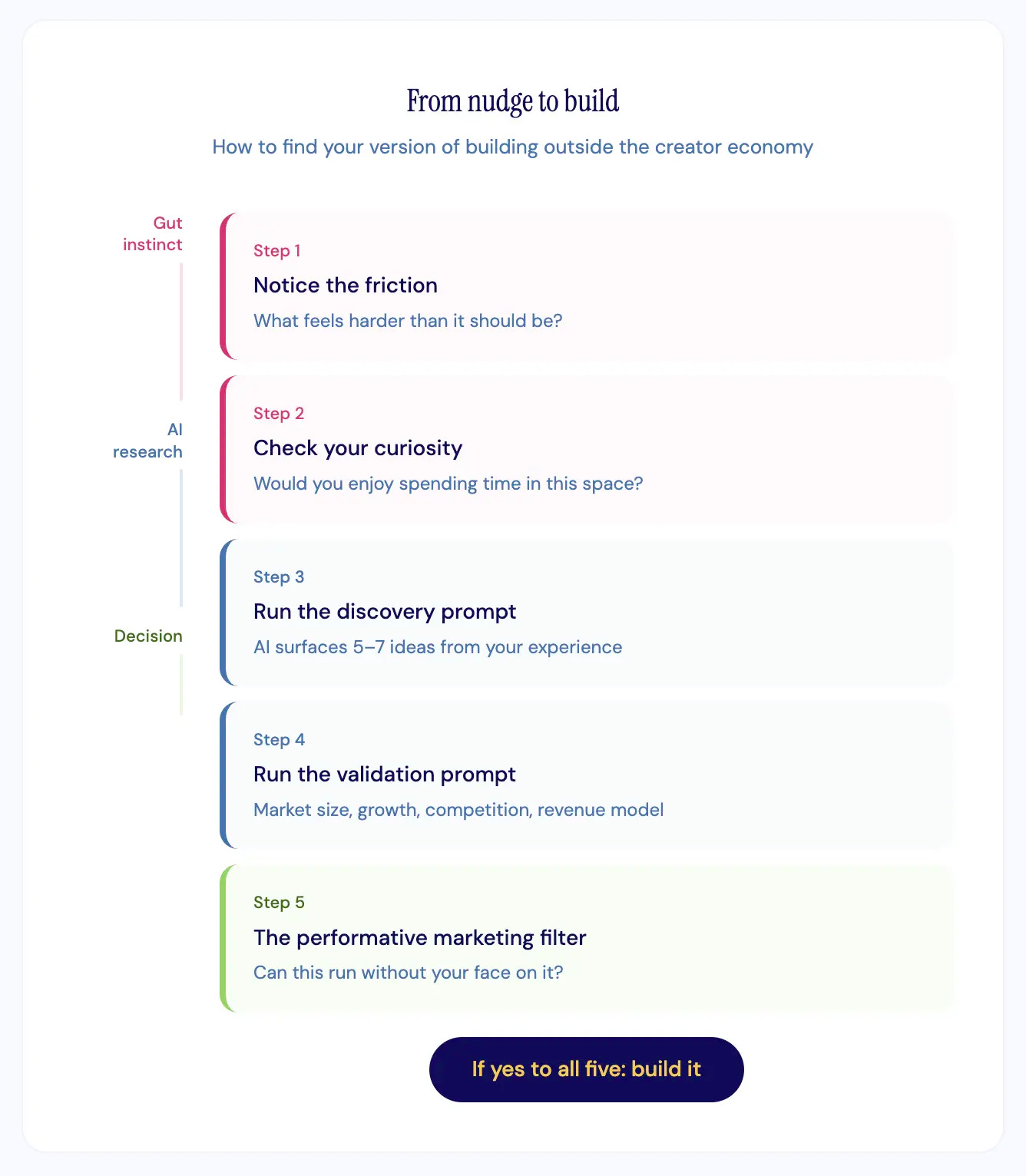
Here’s something I want to be transparent about: neither of these projects came from a spreadsheet. They both started as intuitive nudges, things I noticed, problems that bugged me, markets I was already curious about. The research came second. But when the research landed, it confirmed what my gut was already telling me, and that’s when I knew both were worth building.
I think that’s actually the process, even though it doesn’t look like one from the outside.
If you’re reading this and wondering what your version of “building outside the creator economy” might look like, here’s how I’d start thinking about it. Not as a formal framework, but as a set of questions worth sitting with.
Start with what you already notice.
What industries or problems do you bump into in your own life where you think, “This is way harder than it should be”? In the credit industry, the information is confusing, existing services feel predatory or opaque, and the people who need the most help are the ones least likely to trust it. The condo was even simpler: a friend had a gorgeous property and was paying Airbnb 15% for the privilege of being listed alongside a hundred other properties with no differentiation. I looked at that and thought, “I could build something better.”
Then ask yourself what you’d enjoy spending time in.
This is the part people skip, and it matters more than the market size. If I built a credit platform and hated thinking about personal finance, I’d abandon it in three months. If the condo site were in a place I had zero interest in ever visiting, the content would feel hollow. You don’t have to be an expert in the market, but you do have to find it interesting enough to stay curious as the project grows.
But what if you don’t have a nudge yet?
That’s okay. Most people reading this probably aren’t sitting on a secret business idea they’ve been waiting to validate. They’re thinking, “I love this concept, but I genuinely don’t know what I’d build.” If that’s you, try this prompt first. It’s designed to surface possibilities based on who you already are, not who you think you should be:
I want to explore building an AI-powered product or service outside of the creator economy. I'm not looking for content businesses, newsletters, or courses about AI. I want to find a real market where AI can solve a real problem, and where the business doesn't require my personal brand or daily content to generate revenue.

Here's some context about me: I have experience in [your professional background], I'm interested in or curious about [topics, industries, hobbies, or problems that fascinate you], and in my own life I've noticed friction or frustration with [services, industries, or experiences that feel broken, outdated, or unnecessarily complicated].

Based on that, suggest 5-7 possible AI-powered businesses I could explore. For each one, tell me: what problem it solves, who would pay for it, why AI makes it possible now when it wasn't before, and whether it could run without a personal brand attached to it. Prioritize markets that are growing, fragmented (no single dominant player), and shifting toward digital or subscription-based models.
That prompt does the brainstorming your gut hasn’t gotten to yet. And you might be surprised by what comes back, because AI is very good at connecting dots between your experience and markets you’ve never thought about. The credit repair space wasn’t on my radar until I started paying attention to the gap between what women needed and what the industry was actually offering. Sometimes the nudge is already there, and you just need something to help you see it.
Once you have something worth exploring, validate it.
This is where the research comes in, and it’s where the AI skills you already have become absurdly useful. Here’s a prompt you can use to pressure-test any idea:
I'm considering building an AI-powered [describe what you'd build] in the [industry/niche]. Before I commit any time to this, I need you to help me understand the landscape. What's the total market size? Is it growing, shrinking, or flat? How fragmented is the competition (are there dominant players, or is it wide open)? What percentage of the market is moving to digital/subscription/self-service models? What are the most common complaints from customers in this space? And what would a realistic revenue model look like at a small scale (under 2,000 users)?When I ran this kind of research on the credit repair market, the numbers stopped me in my tracks: $6.6 billion, growing at 14%, massively fragmented, with over 60% of new entrants using subscription-based self-service models. That’s not a hunch anymore. That’s a market begging for someone to build in it.
For the vacation rental project, the research told a different but equally compelling story: 34% of bookings are already happening directly, Airbnb is shifting its entire fee burden onto hosts, and consumer frustration with platform fees is creating genuine demand for alternatives. The math worked even at a single property.
Finally, ask the performative marketing question.
Can this business generate revenue without requiring my face, my name, or my daily presence on social media? If the answer is yes, and the market research supports it, you’ve found something worth exploring. If the answer is “well, I’d need to build a personal brand around it first,” that’s not wrong... but it’s also not what we’re talking about here.
The whole point is to build something that runs on market demand and AI infrastructure, not on you performing for an algorithm.

What Does This Mean for You?
If you’ve been building AI skills to write faster newsletters, automate your social posts, or generate better content... You already have the foundation for something bigger than you think. (Not sure where you stand with AI right now? Take the AI Advantage Profile Quiz — it takes two minutes, and it’ll show you exactly where your skills are.)
What if those same skills could build a business that doesn’t need you to show up on camera every day? What if the content for that business is generated by agents trained on real market research instead of your personal opinions? What if customer interactions are handled by an AI with a personality instead of a generic chatbot?
What if you stopped being the product... and started building products?
I’m not saying abandon your personal brand. (I’m clearly not doing that.) I’m saying the skills you’re developing have applications you probably haven’t considered yet, in markets like credit repair, vacation rentals, local services, niche education, e-commerce... verticals where demand already exists and nobody is waiting for you to build a following first. Pick a market with real demand, apply the AI building skills you already have, and create something that generates revenue without requiring your daily performance.
At this point in my life, I’m looking for revenue streams that don’t require more performative marketing (one brand that requires that type of marketing is all I want). Building with AI beyond content creation has just made that possible for anyone willing to try.
What Comes Next?
This is Part 1 of a series. Over the coming weeks and months, I’m going to document both projects in detail: what I’m building, how I’m building it, what’s working, what’s breaking, and the real numbers behind it all.
I’ll share the agent architecture, content pipelines, scraping strategies, ads, and revenue... all of it. Because I think the best way to prove that AI skills transfer outside the creator economy is to show you, in real time, what happens when you actually try it.
And when both sites are ready for public traffic, I’ll name them. (You’ll get to meet the wallet mascot and the turtle. They’re worth the wait.)
If this resonated, stick around. And if you know someone who’s been heads-down in the AI content creator world and hasn’t looked up to see what else they could build... send this their way.
Let’s find out what happens.
. . .
If you liked this, you might also enjoy:
The Creator Economy Has A Business Model Problem
Everyone’s Building with AI… This Ancient Framework Tells You What to Build
Your Experience Is the Prompt: How I Built the AI Advantage Profile
Kim. You are brilliant. Just brilliant. I hope these two sites work for you. Thanks for sharing your process.
I know off hand at least two people who have been ‘performative marketing’ for several decades. Nothing new there. What you are doing is just making money in different silos. Nice, but also nothing new. Keep it up Kim.